


Evil Tower - Idle Defense TD
4.4395.00 Reviews
App Specs
- Version
- 0.10.12
- Updated On
- License
- Free
- Downloads
- 1,000,000+
- Developer
- Aurecas Games
- Categories
- Strategy
- Platform
- Android
Screenshots


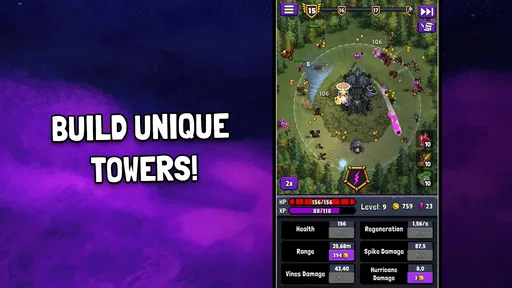
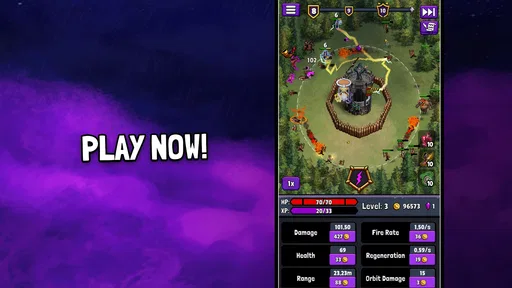
 Analysis by AppCompare
I tend to enjoy strategy games most when a short session still gives me something to think about, and Evil Tower - Idle Defense TD is built around that kind of choice. Its central appeal is not simply watching enemies arrive; it is deciding how to prepare, then seeing whether the defense you assembled holds up. The game is free, made by Aurecas Games, and has drawn over a million installs. I found it easiest to approach as a casual tower-defense game with idle elements, rather than as a deep strategy game that demands long stretches of uninterrupted attention.
The Basics of Evil Tower
At its core, Evil Tower - Idle Defense TD is a tower defense game. But don’t let the "idle" in its name fool you; it’s anything but boring. You’re tasked with protecting your stronghold from waves of enemies, using an array of turrets and traps. The goal is simple: keep those pesky invaders at bay.
Early goals and the first decisions
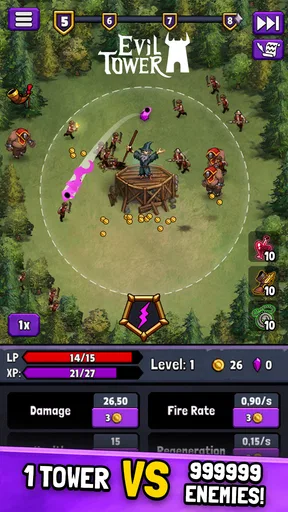
The game kicks off with a straightforward tutorial that gets you up to speed. You start with a basic tower and a few coins. As you defeat enemies, you earn more coins, which you can use to upgrade your towers or purchase new ones. The game cleverly balances between being challenging and rewarding, making it hard to put down.
I found myself constantly strategizing the best placement for my towers. Do I place a cannon tower here or a frost tower there? The choices you make significantly impact your success, adding a layer of depth that keeps the gameplay fresh.
For a new player, the useful early question is not “Which option is strongest?” but “What problem am I trying to solve?” A tower choice matters because it changes how the next wave is handled, so I’d treat each purchase as a response to what is getting through rather than buying upgrades automatically. That small habit makes the opening feel more like planning and less like clicking through a growth loop.
This also makes the game easy to fit into an ordinary break. I can picture opening it while waiting for a kettle to boil, checking what the current defense needs, and making one considered adjustment instead of committing to a long session. If I have more time, I can stay to test the setup against the next challenge. The game’s basic loop supports both moods, although the strategic decisions are more rewarding when I give them attention.
Reading progress without rushing
Progress here is most satisfying when I notice a practical difference in how a defense performs. Coins are useful, but spending them is not automatically progress: an upgrade is worthwhile when it addresses a weakness or strengthens the plan I am already using. I would pay attention to which enemies are reaching the stronghold and whether a change improves that situation. That gives each reward a purpose instead of turning the game into a routine of buying whatever is available.
Worth Reading Before You Choose

EA SPORTS FC Mobile 26 Is a Bigger Football Game, but It Takes Time

Flipboard Shows What News Apps Must Do Beyond the Feed

Switching to Android Auto Means Rethinking Your Driving Routine

Google Calendar Makes a Crowded Week Easier to Manage

Ludo King Makes the Most of the Minutes Between Plans

Baby Panda World Brings Quick Play to Modern Phones, but Its Game Library Feels Busy
Unlocks can also serve as prompts to reconsider a familiar approach. A new tower or upgrade is interesting not only because it adds another option, but because it may make a different combination viable. I would experiment one change at a time where possible; changing the whole setup after a setback makes it hard to tell which decision helped. This is a simple way to learn the game’s rhythms without needing to treat every wave as a high-stakes test.
Gameplay Dynamics
When choosing a defense, I’d think about complementary roles rather than trying to make every tower do the same job. The cannon and frost examples point to a useful trade-off: direct damage versus controlling an enemy’s progress. If a wave is slipping past a powerful but slow response, a control-oriented choice may be more helpful than simply investing further in raw strength. On the other hand, if enemies are being held back but not eliminated quickly enough, additional damage may be the sensible answer.
That kind of adjustment is the main tactical value I see in the game. It gives me a reason to observe what happens instead of assuming a favorite setup will solve every encounter. I would avoid spending all available coins as soon as I earn them; keeping some flexibility can make it easier to respond when the current arrangement is clearly struggling. The trade-off is that this calls for a little patience: players who prefer to make a choice and immediately move on may find the repeated tuning less appealing.
The usual alternatives in tower defense often lean either toward hands-on, level-by-level planning or toward very passive idle accumulation. This game sits between those approaches. Its tower placement and upgrade decisions give me more to consider than a purely passive progress game, while the idle element makes it less demanding than a strategy title built entirely around active play. If I want intricate route planning or a highly competitive challenge, I’d look for a more demanding tower-defense experience. If I want a game that keeps some tactical decisions in a relatively relaxed loop, this is a better fit.
Graphics and Sound
The graphics are vibrant and colorful, with a slightly cartoonish style that adds to the game's charm. Each level is detailed and unique, ensuring that you don’t get bored of the same old scenery. The sound effects, while not groundbreaking, do a great job of immersing you in the action, with satisfying "kabooms" and "zaps" as your towers go to work.
The presentation suits the scale of the decisions. The visual style keeps the action readable and light rather than making every encounter feel grim or punishing, and the sound gives attacks a bit of impact. I wouldn’t choose the game primarily for its audiovisual production, but it helps the waves feel lively and makes a quick check-in more enjoyable. If you usually play with sound off, the core appeal still comes from the defense choices rather than audio cues.
Progression and Customization
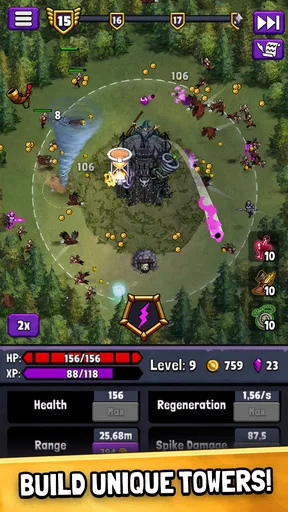
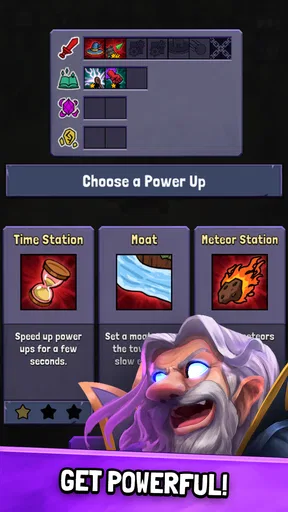
As you advance, the game introduces new enemy types and tougher challenges. But don’t worry, your arsenal grows too. There’s a satisfying sense of progression as you unlock new towers and upgrades. I particularly enjoyed customizing my defense setup to suit my play style. Whether you prefer slow but powerful towers or quick and nimble ones, the game has got you covered.
The difficulty curve is most interesting when a familiar defense stops being enough. That is a useful signal to revisit placement and upgrades, not proof that every earlier decision was wrong. I’d change one part of the setup, watch the result, and then decide whether the next investment should reinforce that change. This measured approach keeps setbacks informative and helps avoid wasting resources on a complete rebuild that may not address the actual problem.
That said, players looking for a single optimal build they can set once and forget may not get what they want from the strategic side. New enemy pressure and tougher encounters make adaptation part of the appeal. The flexibility is a strength if I enjoy testing small variations; it can become friction if I would rather have a straightforward campaign where progress is mostly a matter of unlocking stronger tools.
Idle Mechanics
One of the standout features of this game is its idle mechanics. When you're not actively playing, your towers continue to collect resources. This means you can log back in to find a nice stash of coins waiting for you, which is a sweet touch for those with busy schedules.
That passive income makes the game easier to revisit, but I would treat it as a convenience rather than a substitute for playing. A stash can give me room to make an upgrade when I return; it does not remove the need to decide what the defense needs. A realistic routine might be to check in during a lunch break, spend resources on a specific weakness, and leave again without feeling obliged to monitor every moment. That is where the idle feature is most useful: it softens the stop-and-start nature of mobile play.
It also creates a retention trade-off. Passive rewards are welcoming when I have a busy day, but they can make progress feel less connected to my decisions if I only collect and spend without paying attention to the battles. I get more out of the game when I use the return visit to test a new plan, rather than treating the resource collection itself as the main event.
In-App Purchases
Now, let’s talk about the elephant in the room: in-app purchases. While the game is free to play, it does offer various packs and boosts. However, I found that you can enjoy the game without spending a dime. The in-app purchases are there if you want to speed things up, but they never feel essential.
Purchases range from under a dollar to around eighty-seven dollars per item, so I’d be deliberate about deciding whether convenience is worth paying for. For a player who enjoys gradual improvement, waiting and making careful use of earned resources is likely the more satisfying route. Someone who dislikes any optional spending prompts may prefer a paid game with a single upfront price; here, the free entry comes with the possibility of paid shortcuts.
In practical terms, I would start without buying anything and see whether the normal pace suits me. If I reach a point where progress feels slow, I’d first test whether a better placement or a targeted upgrade solves the issue. That keeps spending from becoming a substitute for understanding the defense. The game is rated for Everyone, and its current version is 0.9.2; it requires Android 7.0 or later. Those details make it easier to judge whether it fits your device and household, while the purchase range is worth keeping in mind before handing the phone to a younger player.
Who will enjoy the pace
I’d recommend the game to someone who likes tower defense but wants room to pause between sessions. The mix of active placement and idle resource collection suits players who enjoy seeing a plan develop without needing to be present all day. It can also work for a newcomer who wants to learn through straightforward choices rather than begin with a dense strategy system.
I’d skip it if my priority were a tightly scripted, story-led campaign, constant hands-on action, or complex competitive tactics. Its appeal is the repeating cycle of preparation, waves, and adjustment, not a promise of an elaborate narrative. Likewise, if I find optional purchases distracting or dislike any wait-and-return rhythm, a premium game with a different progression model may be a better match.
One question a prospective player might have is whether the idle feature means no active play is needed. I wouldn’t read it that way: the passive resources help between visits, while the tower-defense decisions remain the part that asks for attention. Another is whether the game can be enjoyed without spending. My experience suggests that spending is optional, though anyone impatient with gradual progress may be more tempted by boosts. And if the early waves feel easy, I’d give the progression room to introduce tougher challenges before deciding the tactical layer is too light.
Community and Updates
The developers seem to be actively engaged with the community, regularly rolling out updates and addressing player feedback. This is always a good sign and shows that the game is here for the long haul.
The game has an average rating of 4.4 from around twenty-four thousand ratings, with more than three hundred written reviews. I take that as a sign that it has found an audience, not as a guarantee that its pacing will suit everyone. Aurecas Games is the developer behind it, and the game was released in June 2024. Those points give useful context, but my own recommendation still comes down to whether you enjoy the balance of active defense decisions and slower resource growth.
In conclusion, the game is a delightful tower defense experience that offers a blend of strategy and idle mechanics. Whether you're a tower defense veteran or a newcomer, there's plenty to enjoy here. The game manages to keep things interesting with its strategic depth and vibrant presentation. So, if you’re looking for a game that’s fun, challenging, and doesn’t demand your constant attention, give this one a try!
Pros
- Engaging tower defense gameplay.
- Rich variety of enemies and towers.
- Offline play available.
- Regular updates and events.
- Intuitive controls and interface.
Cons
- In-app purchases can be pricey.
- Occasional ads interrupt gameplay.
- Requires strategic planning.
- Some levels are very challenging.
- Graphics can be resource-intensive.
FAQs for Evil Tower - Idle Defense TD
What is the main objective of Evil Tower - Idle Defense TD?
Evil Tower - Idle Defense TD is a strategic tower defense game where players must protect their base from waves of enemies. The main objective is to build and upgrade various towers, employ unique strategies, and manage resources efficiently to fend off increasingly challenging enemy attacks and progress through levels.
Is Evil Tower - Idle Defense TD free to play?
Yes, Evil Tower - Idle Defense TD is free to download and play. However, it offers in-app purchases that can enhance gameplay, such as unlocking special towers, speeding up progression, or acquiring additional resources. These purchases are optional and not necessary to enjoy the full game experience.
What are the device requirements for Evil Tower - Idle Defense TD?
Evil Tower - Idle Defense TD requires a device running Android 5.0 or iOS 10.0 and above. It's optimized for both smartphones and tablets, ensuring smooth gameplay on a wide range of devices. Ensure you have enough storage space and a stable internet connection for the best experience.
How does the game handle progression and difficulty?
The game features a progressive difficulty curve, with each level introducing tougher enemies and new challenges. Players can upgrade their towers and defenses, and unlock powerful abilities to keep pace with the increasing difficulty. Strategic planning and resource management are key to advancing through the game.
Can I play Evil Tower - Idle Defense TD offline?
While Evil Tower - Idle Defense TD is primarily designed as an online experience to save progress and access leaderboards, certain features may be available offline. However, to fully enjoy the game’s features, including updates and events, a stable internet connection is recommended.


